

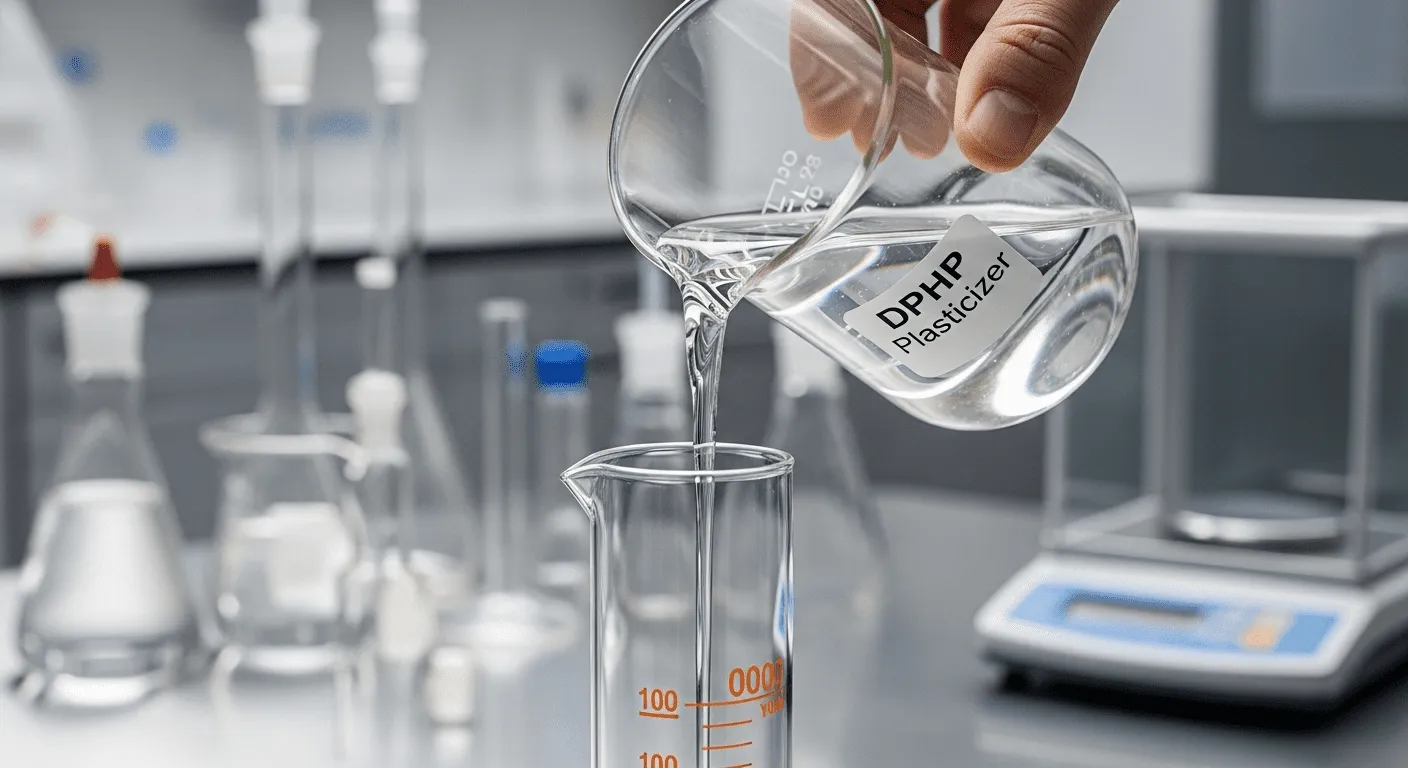
Plasticizers are the most widely used additives in the plastics industry.
These products are generally available as non-volatile, colorless liquids and improve the properties of industrial polymers.
With the variety of chemicals available on the market, choosing the best plasticizer can be daunting.
In this guide, you will read more about these chemicals:
Plasticizers are non-volatile organic substances (usually liquids) that are added to plastics or elastomers.
They are also usually less expensive than other additives and improve the following properties in the polymer:
Plasticizers increase the flowability and thermoplasticity of a polymer.
This is done by reducing the polymer's melt viscosity, TG, TM, and the elastic content of the final product.
During this process, the basic chemical properties of the plasticizer material remain unchanged.
Plasticizers are most commonly used in polyvinyl chloride.
PVC plastic is the third largest polymer in terms of size and volume after PP and PE. Non-plasticized PVC or rigid PVC is used in pipes, siding and window profiles.
Whether plasticized PVC or flexible PVC, it is used in car interior trim, cables, PVC films, flooring, ceilings, wall coverings, etc.
Plasticizing is a process by which the final plastic product becomes more flexible.
By combining the right type and amount of plasticizer, you can change your formulation.
Therefore, choosing the right plasticizer for a specific application is very important.
This process can be done both internally and externally. The following is a picture of the types of plasticizing:

A polymer can be made internally plastic or soft by chemically modifying the polymer or monomer.
This increases the flexibility of the product.
This involves the copolymerization of the desired polymer monomers with a high tg and plastic monomers with a low tg, so that the plasticizer is an integral part of the polymer chain.The most widely used plastic monomers include:
Note: However, this technique is limited: each copolymer is only suitable for specific flexibility requirements.
Also, the complexity of the reaction can lead to longer reaction times and increased costs.
Materials that are internally plasticized and softened exhibit temperature dependence and dimensional instability at high temperatures.
This is the most common method of plasticization and softening.
The reason for this is that low-cost liquid plasticizers give the formulator freedom in developing formulations.
These plasticizers range from semi-rigid to very flexible, depending on the amount.
For example, esters are formed by the reaction of acids or acid anhydrides with alcohols.
There are two main groups of external plasticizers:
Fluids are a subset of secondary plasticizers.
They are usually used with primary plasticizers to reduce costs in general-purpose flexible PVC.
They are mainly low-cost oils that have limited compatibility with PVC.
They are added to reduce costs and, in some cases, to improve fire resistance.
Examples of fillers include:
Stay with us at Maya.